Course Overview
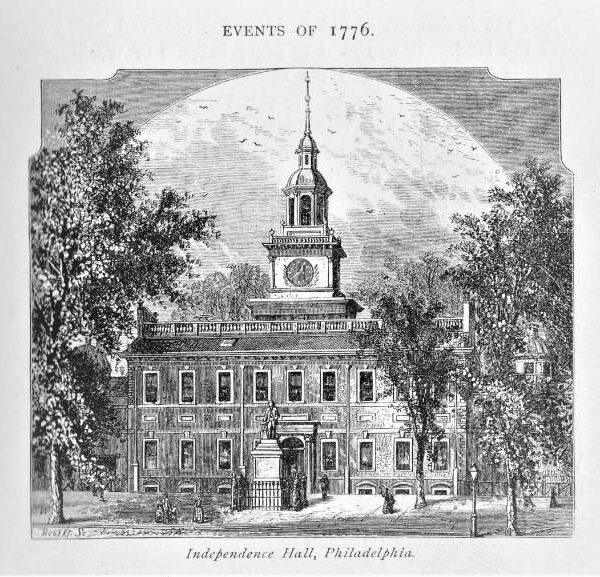
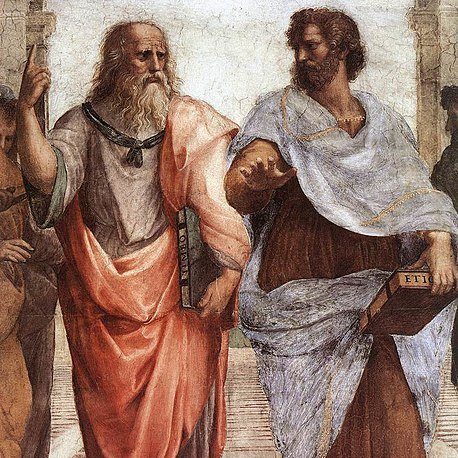
In this full year study of U.S. History, scholars will trace the American story from its
philosophical foundations to its emergence as a modern nation. Beginning with the Allegory of the Cave and the
question of what it means to seek truth, students will explore the early colonies, the ideals of the Mayflower
Compact, the shaping of the Thirteen Colonies, and the conflicts that gave rise to the American Revolution. Through
primary documents such as the Declaration of Independence, the Constitution, and the words of Washington,
Adams, Jefferson, and Lincoln, scholars will examine the principles that formed the republic and the challenges that
tested it—from westward expansion and sectional conflict to secession, civil war, and reconstruction. The course
concludes with an investigation of America’s role in the world wars, the civil rights movement, and its growing
influence in the late twentieth century. Through analytical writing, close reading, historical inquiry, and thoughtful
reflection, scholars will deepen their understanding of the ideas, events, and people that have shaped the American
experiment.
Course Overview
In this full year study of U.S. History, scholars will trace the American story from its
philosophical foundations to its emergence as a modern nation. Beginning with the Allegory of the Cave and the
question of what it means to seek truth, students will explore the early colonies, the ideals of the Mayflower
Compact, the shaping of the Thirteen Colonies, and the conflicts that gave rise to the American Revolution. Through
primary documents such as the Declaration of Independence, the Constitution, and the words of Washington,
Adams, Jefferson, and Lincoln, scholars will examine the principles that formed the republic and the challenges that
tested it—from westward expansion and sectional conflict to secession, civil war, and reconstruction. The course
concludes with an investigation of America’s role in the world wars, the civil rights movement, and its growing
influence in the late twentieth century. Through analytical writing, close reading, historical inquiry, and thoughtful
reflection, scholars will deepen their understanding of the ideas, events, and people that have shaped the American
experiment.
Course Overview
This course is for Texas scholars only.
In this one-semester study of U.S. History and Government, scholars will trace the American story from its
philosophical foundations to its emergence as a modern nation. Beginning with the Allegory of the Cave and the
question of what it means to seek truth, students will explore the early colonies, the ideals of the Mayflower
Compact, the shaping of the Thirteen Colonies, and the conflicts that gave rise to the American Revolution. Through
primary documents such as the Declaration of Independence, the Constitution, and the words of Washington,
Adams, Jefferson, and Lincoln, scholars will examine the principles that formed the republic and the challenges that
tested it—from westward expansion and sectional conflict to secession, civil war, and reconstruction. The course
concludes with an investigation of America’s role in the world wars, the civil rights movement, and its growing
influence in the late twentieth century. Through analytical writing, close reading, historical inquiry, and thoughtful
reflection, scholars will deepen their understanding of the ideas, events, and people that have shaped the American
experiment.
Course Overview
Geometry is the study of mathematical space, a disciplined science that begins with definitions and postulates and
proceeds by rigorous proof to certain and unchanging truths. It is also an art, for the crafting of a clear and elegant
proof is among the most beautiful achievements of the human mind. As a liberal art, geometry frees us from the
notion that all truth is relative and forms in the student a habit of logical and orderly thought. This course follows
Euclid’s Elements, the great textbook that has shaped geometric study for over two millennia. By mastering Euclid’s
definitions, postulates, and propositions—and by learning to construct proofs and solve new problems—students will
come to see why geometry is a noble and worthy pursuit.
Course Overview
Geometry is the study of mathematical space, a disciplined science that begins with definitions and postulates and
proceeds by rigorous proof to certain and unchanging truths. It is also an art, for the crafting of a clear and elegant
proof is among the most beautiful achievements of the human mind. As a liberal art, geometry frees us from the
notion that all truth is relative and forms in the student a habit of logical and orderly thought. This course follows
Euclid’s Elements, the great textbook that has shaped geometric study for over two millennia. By mastering Euclid’s
definitions, postulates, and propositions—and by learning to construct proofs and solve new problems—students will
come to see why geometry is a noble and worthy pursuit.
Course Overview
In this course, students deepen their understanding of arithmetic through the lens of symbolic reasoning. Algebra I
emphasizes logical thought, precision of language, and the beauty of mathematical order. Students explore
variables, expressions, equations, and functions, learning to solve increasingly complex problems using deductive
reasoning. Through Socratic questioning and guided practice, students uncover the foundational structures of
mathematics—including linear, quadratic, and exponential relationships—while connecting abstract concepts to real-
world applications. The course fosters habits of accuracy, perseverance, and intellectual curiosity as students are
trained to reason clearly and communicate solutions effectively.
Course Overview
Algebra II Trigonometry invites students to contemplate the order and harmony woven into the mathematical
universe by extending their study of algebraic structure, functions, and geometric reasoning. Grounded in the rigor
and coherence of the Carnegie Math curriculum, this course guides students through polynomial, rational,
exponential, logarithmic, and trigonometric functions, encouraging them to see mathematics not as a collection of
procedures but as a unified, intelligible whole. Students will explore identities, transformations, and real-world
modeling through deliberate practice, Socratic questioning, and problem-based inquiry. By engaging with rich tasks
that emphasize reasoning, clarity, and precision, students grow in mathematical virtue—perseverance, curiosity, and
intellectual honesty—while preparing for Pre-Calculus and the higher studies of mathematics that await them.
Course Overview
The ninth grade Humane Letters course centers on the great works and ideas of the American canon, tracing the
nation’s development from its founding to the present. Through close reading, thoughtful discussion, and persuasive
writing, you will sharpen your analytical and critical thinking skills. Literature and history are studied together—
supported by primary sources—to help you form sound judgments about the essential questions of the American
experience. Throughout the year, you will strengthen your grammar and composition skills, aiming to master the five-
paragraph essay, LSU thesis writing, and several analytical forms. You will apply these skills in essays on the
literary, historical, and philosophical ideas encountered in your readings.
Course Overview
While tenth grade Humane Letters deepens scholars’ capacities in the art of reading, listening, speaking, and
writing, this course differs from ninth grade Humane Letters in requiring scholars to engage in a reflection on the
works of modern European literature, philosophy, and politics. The course balances the study of history and seminar,
writing and rhetoric. Scholars are expected to make marked advances in developing the proper habits of seminar
discussion.
Course Overview
The Economics course deepens scholars’ understanding of human nature by examining human action in a world of
scarcity and pursuing the True, the Good, and the Beautiful. Scholars learn the “economic way of thinking,”
recognizing that social outcomes arise from the real choices and values of individuals rather than impersonal forces.
The course introduces foundational ideas in microeconomics, macroeconomics, and the history of economic
thought, helping scholars see how familiar principles explain seemingly complex events. Students begin with
microeconomics, studying how individuals and groups make decisions as producers and consumers, as well as the
government’s role in shaping incentives and correcting market failures. The course concludes with macroeconomic
topics—such as growth and monetary and fiscal policy—while emphasizing that large-scale trends ultimately reflect
countless individual decisions.